
Overweight/Underweight Execution via Memory Thematic ETFs in Sector Rotation
Sector rotation in the age of AI is no longer just about “tech vs cyclicals” or “growth vs value.” It is increasingly about which layer of the AI stack you choose to emphasize at any given moment: compute, memory, storage, networking, or power. Among these, memory has quietly become one of the most powerful levers, because it sits at the bottleneck where AI performance and cost converge. Using memory-focused, or “memory semantic,” ETFs to execute overweight and underweight decisions inside broader sector rotation frameworks opens up a new, more nuanced way of moving capital between themes.

This post explores how such execution might work. We will treat memory semantic ETFs as tools for tilting exposure within technology and AI infrastructure sectors, showing how investors could use them to lean into or away from the memory component of AI storage and computing power while rotating across markets and cycles. The lens will stay flexible—partly technical, partly narrative—because real sector rotation is more art than rigid formula.
Memory Semantic ETFs: What Are They, Conceptually?
“Memory semantic ETF” is not yet a standardized label on a trading screen, but it captures a type of product that already exists in early form. These are funds that:
- Choose constituents based on their semantic relationship to “memory” and “storage” within the AI infrastructure stack: DRAM, HBM, NAND, SSDs, storage fabrics, controllers, and data center storage systems.
- May include both pure memory manufacturers and companies for whom memory and storage are core profit drivers.
- Explicitly frame themselves as vehicles to gain exposure to AI’s memory bottleneck rather than generic semiconductors.
Think of them as thematic filters that understand what “memory” means in the AI context—not just chips, but the whole set of businesses that ensure data can be held and fed at speed. When we talk about using these ETFs for overweight/underweight execution, we’re really talking about how to dial up or down this memory-centric slice of tech relative to other slices.
Sector Rotation: From Broad Strokes to Fine-Grain Tilts
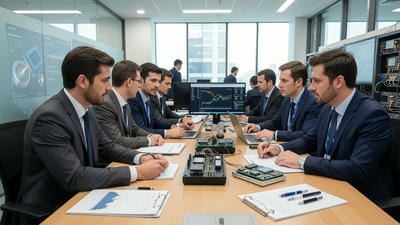
Traditional sector rotation might involve big reallocation decisions: moving out of tech into industrials, dialing down growth and increasing value, or shifting from defensives to cyclicals. In an AI-dominated cycle, many investors will stay within the broad technology and communication/services sectors but rotate between subsectors and themes:
- GPU and accelerator plays vs. memory and storage plays.
- Cloud platforms vs. semiconductor manufacturers.
- AI infrastructure vs. consumer devices and legacy IT.
Within this narrower arena, memory semantic ETFs become one of the levers. They allow you to overweight or underweight the memory piece of the puzzle without having to pick individual stocks or reengineer a whole sector allocation. Instead of saying “I’m rotating out of tech,” you might say “I’m rotating from compute-heavy tech into memory-heavy tech,” or vice versa, depending on where you think the cycle is headed.
Overweighting Memory in an AI Upcycle
When AI demand is surging and memory tightness is palpable—high-bandwidth memory shortages, rising DRAM prices, capacity expansions—it can make sense to overweight the memory segment relative to the broader tech sector. Memory semantic ETFs are a natural tool for this.
An execution plan might look like:
- Baseline sector exposure: Hold a diversified tech or AI infrastructure ETF that covers semiconductors, cloud, and platforms as your core.
- Memory overlay: Add a memory semantic ETF on top, increasing your effective weight in memory-related names without abandoning the broader stack.
- Position sizing: Decide how much of your tech allocation you want to tilt into memory based on your conviction about pricing cycles, capacity expansions, and AI deployment trends.
This overweight is not just a bet on a few chipmakers; it’s a structured tilt toward the part of the AI infrastructure that you believe will capture more margin and narrative in the upcycle. The memory ETF’s semantic structure ensures you’re not just adding random semis, but specifically targeting the memory and storage dimension.
Underweighting Memory When Cycles Peak or Normalize

Memory is famously cyclical. When prices and margins have already surged and capacity expansions are well underway, the risk of a downcycle or at least normalization increases. In those phases, sector rotation may involve underweighting memory relative to other AI themes.
Using memory semantic ETFs, the execution can be symmetric:
- Reduce or remove the memory overlay: If you previously had a dedicated memory tilt, you can dial it back, returning to baseline tech exposure.
- Rotate into other AI segments: Shift the capital into compute-centric or platform-centric ETFs, emphasizing areas less sensitive to memory pricing cycles.
- Use derivatives for smoother transitions: For larger mandates, options or swaps linked to memory indices can be used to gradually unwind tilts or hedge memory exposures rather than abruptly selling ETFs in the spot market.
In other words, underweighting is not abandoning the memory story forever. It is recognizing that certain phases of the cycle call for a lighter touch, especially when valuations and expectations have run ahead of fundamentals.
Memory Semantic ETFs as “Semantic Knobs” in Portfolio Design
A helpful way to picture these ETFs is as semantic knobs on a portfolio dashboard. Instead of only controlling broad sector weights, you have knobs for:
- Compute semantic exposure (GPUs, accelerators, CPU-centric semis).
- Memory semantic exposure (DRAM, HBM, NAND, storage systems).
- Data center infrastructure semantic exposure (racks, cooling, networking, hosting).
- Power infrastructure semantic exposure (grid, generation, energy storage).
Sector rotation becomes a series of adjustments to these knobs. Overweighting memory via a semantic ETF is turning the memory knob up; underweighting is turning it down. The key is that each knob corresponds to a coherent slice of the AI storage and computing power story, rather than arbitrary stock lists.
Relative Value Rotation: Memory vs. Compute vs. Cloud
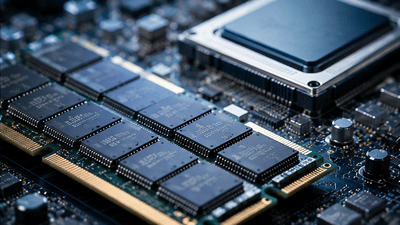
Not all rotations are absolute; many are relative. An investor might remain fully invested in tech but change the mix:
- Memory vs. compute: Expecting memory to outperform GPUs as bottlenecks shift, you overweight memory ETFs and underweight pure compute ETFs.
- Memory vs. cloud platforms: If hyperscalers are facing margin pressures while memory suppliers still enjoy pricing power, you tilt from cloud-oriented ETFs toward memory semantic ETFs.
- Memory vs. diversified semis: Choosing sharper exposure to memory instead of broad semiconductor indices, especially when memory cycles diverge from other chip segments.
These relative rotations are more nuanced than “risk on/risk off.” They depend on how you read the AI infrastructure stack at any given time. Memory semantic ETFs provide clear instruments for these tilts, because they explicitly encode “memory” in their construction.
Integrating Index Derivatives in the Rotation Logic
ETF-based rotation is straightforward for many investors, but index derivatives can add another layer of flexibility and precision. For example:
- Futures overlays: Use futures on memory indices alongside ETFs to quickly increase or decrease exposure without changing the core ETF holdings.
- Options-based rotations: Buy calls on memory indices when you want a convex overweight (benefiting more from large moves) or buy puts for a convex underweight (protection in downcycles).
- Spread trades: Trade spreads between memory index futures and broad tech or semiconductor index futures to express relative rotation more directly.
Derivatives let larger or more tactical portfolios implement rotation while preserving the structure of the underlying ETF positions. Memory semantic ETFs thus become the anchor, and index derivatives become the fine-tuning instruments.
Risk Considerations: Volatility, Liquidity, and Concentration
Rotating into and out of memory via thematic ETFs is not risk-free. Several considerations need to stay in view:
- Volatility: Memory segments can be more volatile than broad tech indices; overweighting them increases portfolio beta and drawdown potential.
- Liquidity: Some memory ETFs may be concentrated in a small number of large names or include less liquid stocks, affecting trade execution and bid–ask spreads.
- Concentration: Overweighting memory might inadvertently concentrate portfolio risk in a handful of companies or countries where memory manufacturing is clustered.
A prudent rotation framework will:
- Limit the size of extreme memory tilts relative to total assets.
- Combine memory semantic ETFs with broader AI infrastructure exposures to avoid one-dimensional bets.
- Monitor valuation and cycle indicators, not just price momentum, when deciding overweight/underweight moves.
The goal is to use memory semantic ETFs as rotation tools without letting them dominate risk unwittingly.
Time Horizons: Tactical vs. Strategic Rotations
Different investors will use memory semantic ETFs on different time horizons:
- Tactical rotations: Short to medium-term tilts based on cycle inflection points—earnings, pricing changes, policy events. These may last weeks to months.
- Strategic rotations: Longer-term shifts that reflect structural views—for example, believing that memory will remain a bottleneck for several years as AI scales, and keeping a persistent overweight.
- Hybrid approaches: Maintaining a base level of memory exposure as a strategic view, with tactical adjustments around that base as cycles and valuations change.
Memory semantic ETFs can serve all three time frames, but clarity about intent helps. A strategic investor might keep a constant allocation and only tweak around the edges; a tactical trader might move in and out more aggressively using both ETFs and derivatives.
Practical Examples of Rotation Paths
To make the idea more concrete, imagine a few rotation paths an investor might follow over a full AI memory cycle:
- Early-cycle phase: AI demand is rising; memory pricing just starting to firm. The investor increases allocation to a memory semantic ETF, reducing weight in less leveraged tech segments.
- Mid-cycle phase: Memory prices and margins peak; valuations look rich. The investor gradually underweights memory, rotating into broader AI infrastructure and software themes.
- Late-cycle reset: A downcycle or normalization occurs; memory stocks correct. The investor either avoids memory until signs of stabilization, or starts rebuilding exposure carefully at lower prices.
Each phase involves shifting weights, but the instrument for memory-specific shifts remains the semantic ETF (and its associated index derivatives). The rest of the sector rotation—between tech, other sectors, and cross-market exposures—happens alongside these memory moves.
Closing Thoughts: Memory as the Rotational Pivot
Overweight/underweight execution via memory semantic ETFs is, at heart, about acknowledging that AI storage and computing power has an internal structure. Memory is not a side note; it is a pivot point. Sector rotation that treats tech as homogeneous misses that nuance. Sector rotation that uses memory semantic ETFs as specific levers gains a clearer way to express views about where the bottlenecks, margins, and risks really are.
When the cycle favors memory, these ETFs let investors lean in with a coherent, theme-aligned instrument. When the cycle turns or valuations overreach, the same products become exit ramps or underweight tools. Layered with index derivatives, they form a flexible system for rotating across AI infrastructure segments without losing sight of the underlying story. In an era where AI reshapes markets, treating memory as a semantic axis in sector rotation may be one of the sharper tools an investor can wield—provided it’s used with both conviction and care.
You May Like

Narrowing Spread Between NAND Spot and Contract Prices in 2026 – A Signal
By 2026, one of the most watched metrics in the NAND flash market has started to shift in a subtle but meaningful way: the spread between spot prices and long‑term contract prices is narrowing. For casual observers, this may look like just another incremental change in a notoriously volatile industry. For memory makers, module houses, device OEMs, and data center buyers, however, a tightening gap between spot and contract prices is a signal—a reflection of evolving supply–demand balance, risk perceptions, and strategic behavior on both sides of the market.

Price Divergence Trading Strategies Between NAND Flash and DRAM ETFs
NAND flash and DRAM sit at the core of AI storage and computing power. Both are memory, but they are not the same business. DRAM is main memory—fast, volatile, and central to high‑bandwidth workloads like AI training and inference. NAND is non‑volatile storage—slower than DRAM, but crucial to persistent data and large‑scale object storage. The cycles that drive their pricing and margins overlap, yet they often diverge. That divergence is where trading strategies between NAND and DRAM ETFs become interesting.

China’s HBM Localization Progress: The Catch-Up Pace of CXMT and XMC
China’s drive to localize advanced memory technologies has accelerated over the past several years. High-Bandwidth Memory (HBM) sits near the center of that strategy because it is integral to AI accelerators, high-performance computing (HPC) and other strategic compute platforms. Two domestic players—ChangXin Memory Technologies (CXMT) and XMC (Xianghui Memory, commonly referred to as XMC)—have become focal points in assessing how quickly China can close the gap with international incumbents on HBM die, stacking, and packaging.

Thermal Simulation Challenges and Solutions in 3DIC AI Chip Design
As AI workloads push chips to deliver ever higher compute density, designers are increasingly turning to three‑dimensional integration (3DIC) to stack dies vertically and pack more functionality into limited footprints. While 3DIC architectures unlock significant performance and bandwidth advantages, they also introduce complex thermal behaviors that are far harder to predict and manage than in traditional 2D layouts.

An Attempt at Compiling a Memory+Compute Fusion Thematic Index – A Dual-Track Framework
Most AI investors talk about “compute” as if it were the whole story: GPUs, accelerators, chips, cores. But every one of those cores needs somewhere to read from and write to. Memory and storage define how wide the data highway really is. In practice, AI performance is a fusion of compute and memory, not a solo act. So why do so many indices and ETFs separate them into different silos—one for semiconductors, one for memory, one for data centers—when the actual workloads keep blending them?

Surging Demand for Laser Drilling and Plasma Dicing Equipment in Advanced Packaging
Advanced packaging has become one of the semiconductor industry’s most important growth engines, and it is now pulling a surprising set of process tools into the spotlight. Among the most in-demand are laser drilling and plasma dicing equipment. These machines sit close to the heart of heterogeneous integration, fan-out packaging, wafer thinning, TSV formation, glass substrate processing, and other advanced flows where precision, yield, and throughput matter enormously. As packaging moves from a back-end afterthought to a strategic platform, the equipment used to shape, open, and separate materials has become just as important as the dies themselves.
D2D Interface Bandwidth and Latency Comparison in Chiplet Architectures
Chiplet architecture has turned the package into a real performance battleground. Once multiple dies are placed side by side or stacked within the same advanced package, the quality of the die-to-die, or D2D, interface becomes one of the most important determinants of system behavior. Bandwidth is no longer a nice-to-have metric, and latency is no longer a small implementation detail. Together, they shape whether a chiplet system feels nearly monolithic or frustratingly fragmented.

Stock Selection Logic and Alpha Validation of ESG-Themed Semi ETFs
Semiconductor themed ETFs are no longer just about growth and cycles. A growing subset now layers environmental, social, and governance (ESG) criteria on top of traditional sector exposure. These ESG semi ETFs promise two things at once: access to one of the market’s most powerful secular themes, and alignment with sustainability and governance standards. The pitch is appealing, but it raises two hard questions. First, how exactly are these stocks being selected? Second, does the ESG overlay help, hurt, or leave alpha unchanged?